Feeding San Francisco’s Future: Healthy Kids, Good Jobs, Thriving Communities

Every weekday, nearly 30,000 youth at San Francisco public schools rely on school food as a main source of nutrition, and because most schools lack full kitchens, most of their meals are made outside the city by a single vendor, trucked in, and reheated. Here in the region that gave the country farm-to-table dining, in a city named for a saint who fed the poor, we take pride in exceptional food and caring for our neighbors. Yet San Francisco’s public schools have long needed to depend primarily on one outside company for this mission-critical service to children, leaving insufficient control over what goes into meals, and missed opportunities to engage local farms and food businesses in a multi-million-dollar school food market.
In response to the Boundless San Francisco grant competition sponsored by Crankstart and Lever for Change, The Center for Ecoliteracy is proud to team up with SFUSD Student Nutrition Services, and Chef Ann Foundation on a bold plan to transform that anchor food security program, revitalizing San Francisco’s public school food system from the farm to the lunch tray.
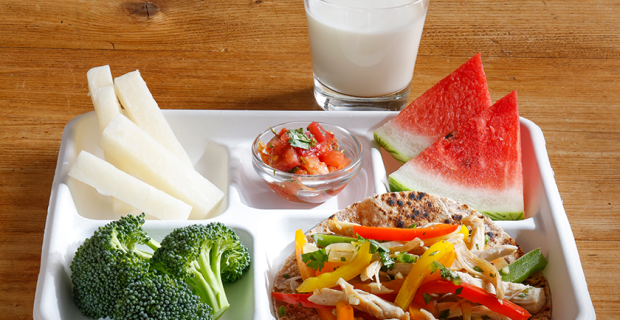
Our project, “From Local Farms to Lunch Trays: Feeding San Francisco’s Future,” answers Crankstart’s open call for ambitious ideas that strengthen the city with a plan to assist SFUSD in opening its new voter-funded Central Kitchen and shift schools from pre-packaged vended meals to freshly-prepared, scratch-cooked school lunch made with California-grown food. It is a farm to school initiative designed to change the whole school food system: what students eat, who grows it, and who cooks it.
Voters Built the Kitchen. This Project Opens It.
In November 2024, more than 75% of San Francisco voters approved a school bond that funds a new Student Nutrition Services Hub at 801 Toland Street. Its centerpiece is a commercial grade Central Kitchen able to cook freshly-prepared meals for schools across the city. Construction is scheduled to finish in time for the kitchen to open in August 2029.
The facility provides a critical foundation, but a building alone does not change what students eat. The bond pays for construction; with a Boundless San Francisco grant, our project would open and run the kitchen, and heal a fundamental disconnection students, families, teachers and staff have to their food and local sources. The project includes creating new family-sustaining jobs, hiring and training a new culinary workforce, developing recipes students love and increasing student participation in school meals, reducing food and packaging waste, and building local supply chains with outreach to small and mid-sized businesses that have experienced barriers to the school food market.
SFUSD has already planted the seeds for success. In October 2026, the district began cooking locally sourced raw protein at 12 schools, and fresh bulk service lines and salad bars have dramatically increased student satisfaction.
Good Food Purchasing: Local Leadership with Citywide Reach
SFUSD has a history of leadership, becoming the first San Francisco public agency to adopt the Good Food Purchasing Program in 2016. This national program asks institutions to bring core values to their purchasing, making choices that support five values: local economies, a valued workforce, community health and nutrition, environmental sustainability, and animal welfare.
SFUSD’s leadership inspired the city to follow. San Francisco adopted a Good Food Purchasing resolution in 2018 and an ordinance in 2020, and in September 2025, the city renewed that commitment for another decade. SFUSD has since grown its local food purchasing and earned recognition for its progress.
A scratch-cooking Central Kitchen is the next step. Recommended as the most effective way to support those core values, the Central Kitchen will give SFUSD more control over ingredients and menus, so the district can put good food purchasing values into practice at a scale no vended model allows. Ultimately the Central Kitchen will provide meals for 50,000 students a year at 95 schools, and become a permanent community asset to the City and County of San Francisco.
Students, Families, and Staff at the Table
This project is designed to not only elevate nutrition, taste and quality through scratch-cooked meals, but elevate the voices of the students, parents, teachers and staff in shaping what is served. The Center for Ecoliteracy will lead community engagement initiatives with each school launch, enlisting the people who eat and serve school food to help shape it. Plans include:
- A community advisory board of students, families, school nutrition staff, and local producers
- Taste tests and recipe feedback, so new menus reflect the cultures and preferences of San Francisco diverse students
- Launch events and family outreach as each wave of schools transitions from reheated vended meals to Central Kitchen service, with materials and presentations in the diverse languages SFUSD families speak
- Food education that connects the classroom, cafeteria, and garden, including visits to the Central Kitchen
When students know where their food comes from and who prepared it, and have an opportunity to shape what is served, school meals become something they own.
Opening the School Market to Local Farms and Food Businesses
A district-scale kitchen needs a reliable local supplier base. Many small and mid-sized local farms and food businesses have not been able to sell to the multi-million dollar school market due to barriers such as lack of capacity to navigate requirements and submit bid paperwork, inability to compete with large commercial farms on pricing, to difficulty meeting food safety certification and delivery requirements. This project will outreach to local farms and food businesses – particularly those that have not sold to institutional customers before – to build their capacity to engage in the school food market.
The Center for Ecoliteracy will offer outreach and technical assistance to help these farms and food-related businesses become SFUSD suppliers. That includes workshops and one-on-one support in multiple languages, practical guides, and microgrants to help cover the cost of required certifications. Every dollar SFUSD shifts to local producers stays in California communities and strengthens the regional food system.
Measuring What Matters
The Center for Ecoliteracy will lead monitoring, evaluation, and learning so that as each wave of schools begins Central Kitchen services, and as the local supplier base grows, we continually build on learnings. The partners will track meal participation, student satisfaction, food waste, local purchasing, and new jobs, and compare schools that have transitioned with those that have not yet. Periodic third-party Good Food Purchasing assessments will provide independent checks on progress.
Findings will not only be shared with San Francisco’s students, families, and staff, but with a broader California Food for California Kids® Network, reaching more than 170 school districts across the state, so that other communities can learn from San Francisco’s leadership.
More than a Meal: A Model for Systems Change
This project is about more than what is on the tray. It is a system-changing investment in San Francisco’s future:
- Healthy kids: Freshly-prepared, scratch-cooked meals made with California-grown food for the students who depend on school lunch most
- Good jobs: New skilled culinary positions in the Central Kitchen, with training from Chef Ann Foundation in scratch cooking, food safety, and kitchen operations
- Thriving communities: School food dollars that flow to local farms and food businesses, and students, parents, and staff connected to the source of their food like never before
- Sustainability: Meals cooked from scratch in bulk instead of arriving pre-packaged, which cuts single-use packaging and food waste. Shorter supply chains to nearby farms, and a zero-emission fleet delivering from Central Kitchen to schools reduces reliance on fossil fuels and harmful emissions. Buying from nearby farms and food businesses also makes San Francisco’s food supply more resilient. When disasters, fuel shortages, or long-distance shipping delays disrupt supply chains, local sources can keep fresh food reaching students and help protect school food budgets from sudden price spikes.
Additional Links:
- SFUSD bond page (Student Nutrition Services Hub + Shops)
- California Food for California Kids® Network
- Chef Ann Foundation
“San Francisco helped launch the farm-to-table movement. With this project, the city can show what that movement looks like when it reaches every student.”
- Alexa Norstad, Executive Director, Center for Ecoliteracy